Research
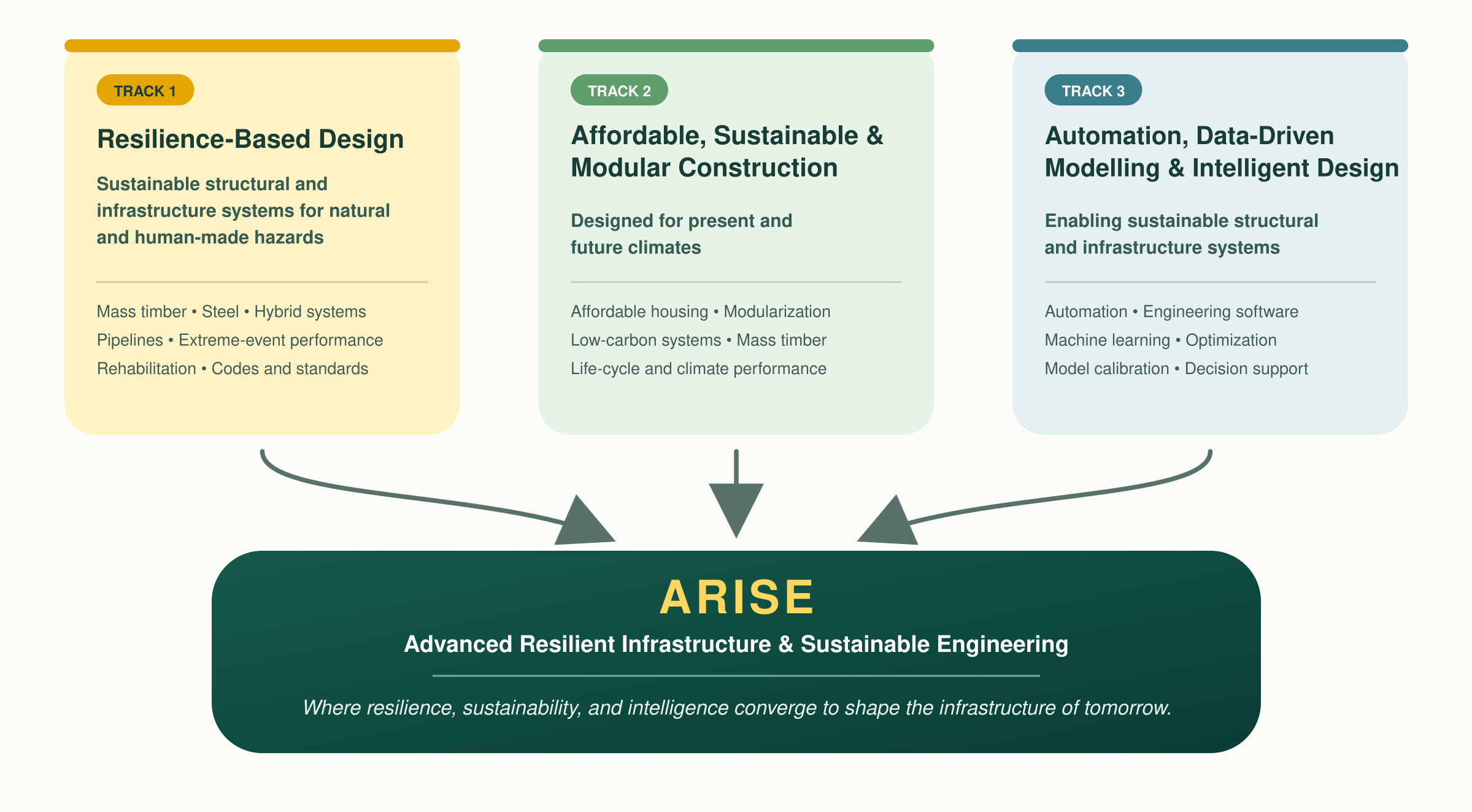
My research program is organized around three interconnected tracks. Track 1 focuses on resilience under extreme events and infrastructure deterioration. Track 2 addresses affordability, sustainability, modularization, and climate-responsive construction. Track 3 provides the automation, computational, and data-driven methods that support the first two tracks.
Track 1 — Resilience-Based Design of Sustainable Structural and Infrastructure Systems for Natural and Human-Made Hazards
This track advances the design, assessment, and rehabilitation of sustainable structural and critical infrastructure systems subjected to natural hazards, human-made hazards, accidental damage, and deterioration. It encompasses buildings, pipelines, and other infrastructure that must remain safe, functional, and repairable throughout their service lives.
For buildings, the research focuses primarily on mass-timber, steel, and steel–timber hybrid systems. It investigates how these systems can move beyond minimum life-safety requirements to limit damage, preserve functionality, and facilitate inspection, repair, and recovery following extreme events. Large-scale experimental testing is combined with advanced numerical simulation and analytical modelling to develop practical performance- and capacity-based design methods.
The track also includes assessing, rehabilitating, reinforcing, and extending the service life of pipeline infrastructure. This research evaluates the behaviour of damaged and aging pipelines and develops innovative reinforcement and repair technologies using composite wraps, sleeves, elastomeric materials, and other advanced solutions.
The long-term goal is to develop sustainable structural and infrastructure systems that can withstand extreme events and deterioration, minimize damage, maintain essential functions, and support efficient repair and recovery.

Track 2 — Affordable, Sustainable, and Modular Construction for Present and Future Climates
This track focuses on developing affordable, low-carbon, resource-efficient, and climate-responsive construction solutions for buildings and communities. It addresses the need to deliver housing and other essential facilities faster and more economically while reducing environmental impacts and maintaining long-term performance.
The research investigates how prefabrication, modularization, mass timber, and other innovative construction approaches can reduce project costs, construction time, labour requirements, embodied carbon, and material waste. It also considers how buildings and construction systems can be adapted to current and future climatic conditions, including changing temperature, moisture, and environmental exposure.
Life-cycle assessment, life-cycle cost analysis, hygrothermal analysis, and experimental testing evaluate design alternatives across their complete life cycles—from material production and construction to operation, adaptation, and eventual replacement.
The long-term goal is to create scalable construction solutions that integrate affordability, sustainability, modularization, and climate adaptability at both the building and community levels.
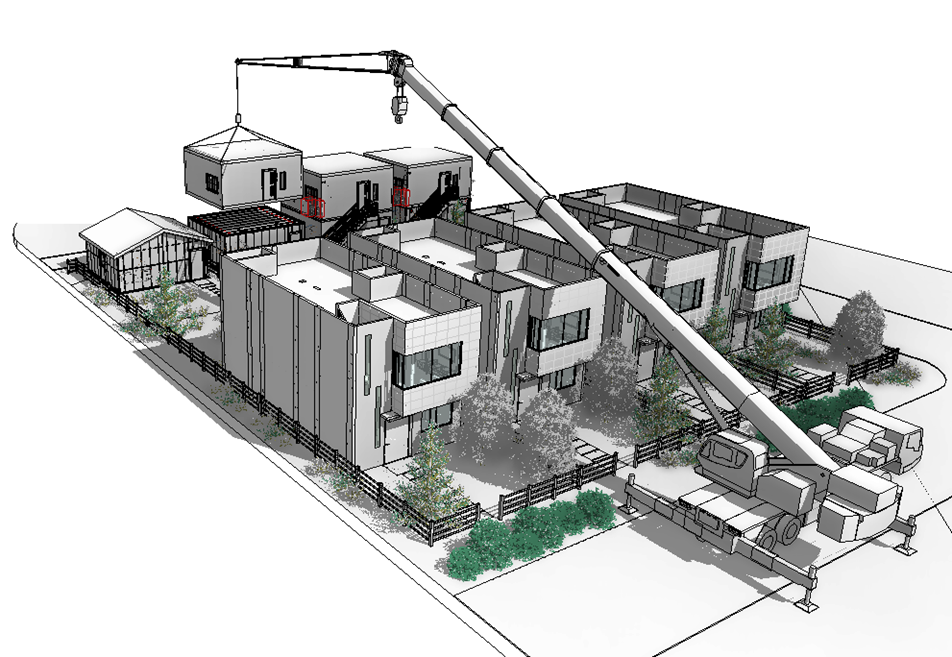
Track 3 — Automation, Data-Driven Modelling, and Intelligent Design of Sustainable Structural Systems
This track integrates engineering automation, data analytics, machine learning, optimization, and software development with structural and infrastructure engineering. It supports the automated analysis, design, assessment, and optimization of sustainable structural systems.
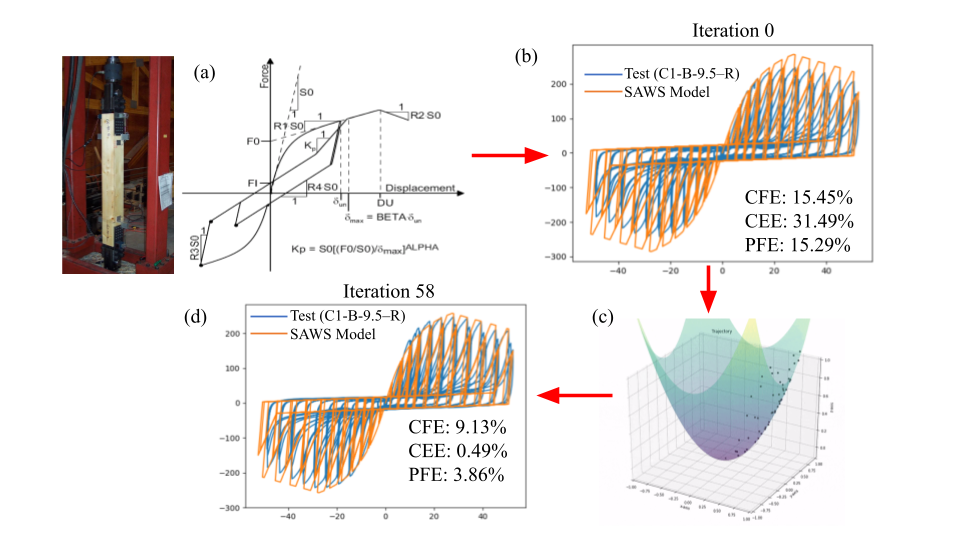
The research combines mechanics-based engineering knowledge, experimental evidence, and data-driven methods. Rather than replacing engineering judgment, these tools allow engineers to evaluate larger numbers of design alternatives, calibrate complex numerical models, interpret experimental data, identify efficient structural solutions, and make better-informed decisions.
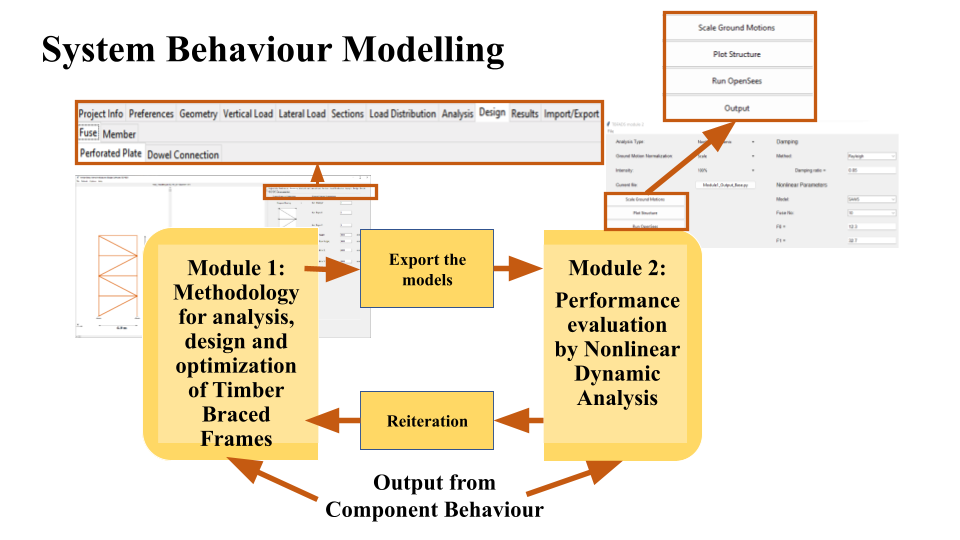
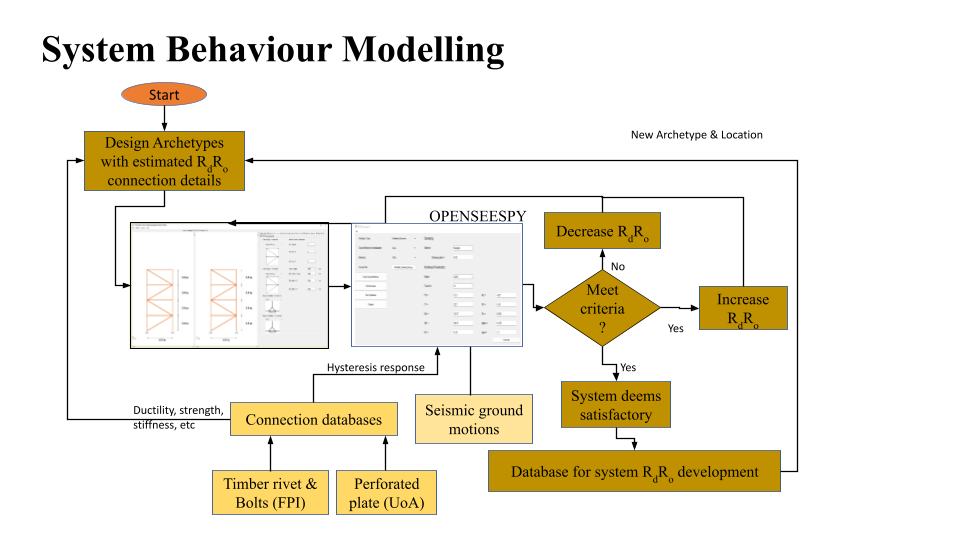
A major focus is developing research-oriented computational platforms that automate time-consuming engineering processes—from generating structural archetypes and conducting nonlinear analyses to evaluating performance and optimizing complete structural systems.
The long-term objective is to advance the digital transformation of structural engineering by creating transparent, reliable, and practical computational tools for designing and assessing safer, more resilient, sustainable, and affordable structural systems.