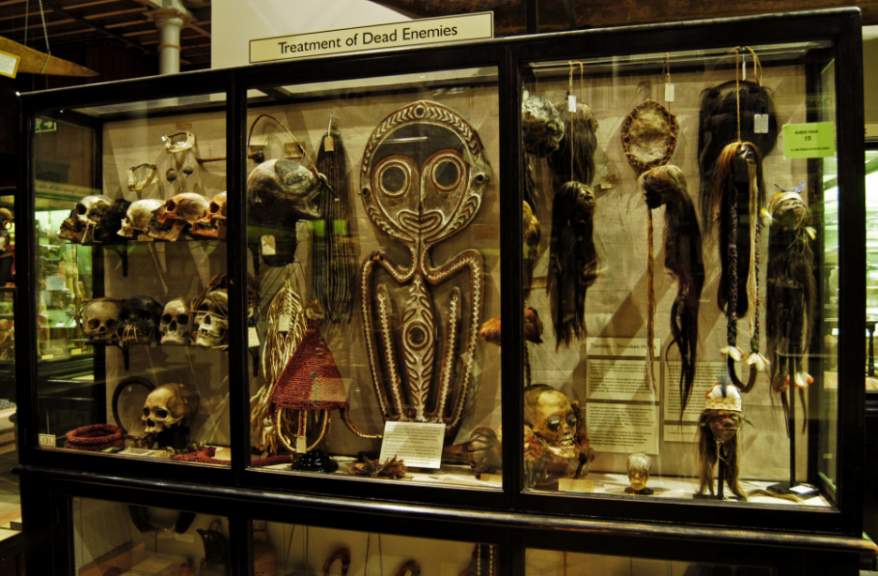
Museums must sift through a network of relationships and histories when identifying objects.
"Poisoned arrows" from Melanesia are displayed at the Pitt Rivers Museum in
a way that reflects the views of the Rev. Robert
Codrington. The missionary donated dozens of arrows in his will, and during
his lifetime he carefully explained the spiritual power of these objects to
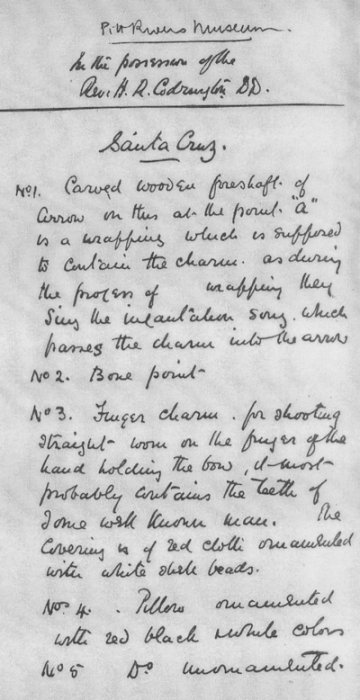
anthropologists and collectors, such as James Edge-Partington (see left).
Note that the arrows which went to the Pitt Rivers are not described as poisoned, and were displayed in the "Treatment of Dead Enemies" case (rather than a weaponry case).
Other Melanesian arrows, destined for other museums, were identified differently.
Edge-Partington also consulted Captain Markham's
account of HMS Rosario's cruise, and spears or arrows that Markham collected
(now at the British Museum) were identified as "poisoned".
The "Relational Museum"
project at the Pitt Rivers Museum is exploring these histories of interpretation.
© 2006, Jane Samson and Matthew and Katalin Wangler.