
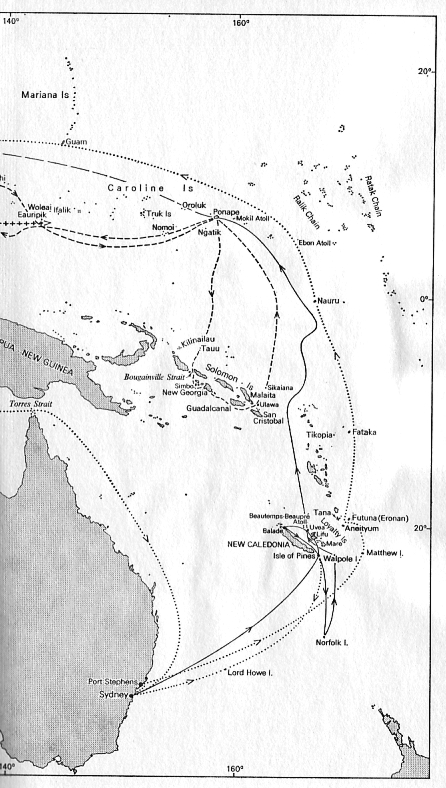
A trader in sandalwood for the Chinese market, Andrew Cheyne visited many of the western Pacific islands in the 1840s. Cheyne and his crew were attacked by islanders on several occasions, sometimes with "poisoned arrows".
Almost a decade before substantial naval exploration
in the area, Andrew Cheyne and other traders ventured through the western
Pacific islands in search of goods for the Chinese market. Cheyne gathered
sandalwood from 1841 and 1844 and, unusually, made a written account of his
adventures.
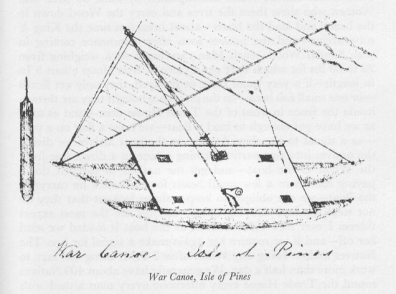
After first-hand experience of battling with various islanders, Cheyne made notes and drawings of indigenous weaponry. In 1844, at the island of Georgia in the Solomon Islands, some other islanders on board began firing muskets at the canoes of the Georgia people. Men in the canoes "were just in the act of returning by a shower of poisoned arrows, when - to prevent which - and save our people from being wounded - who had nothing to do with the quarrel, I ordered a few muskets to be fired over their heads to frighten them away …"
Cheyne does not tell us how he knew the arrows were poisoned; he simply presents the information as a fact. Given the prevalence of such assumptions, this is no surprise. What remains a mystery, however, is where and when these assumptions first arose.
Source of quotation, image and map: Dorothy Shineberg, ed. The Trading Voyages of Andrew Cheyne, 1841-1844 (Honolulu: University of Hawai'i Press, 1971), 41, 308 and endpapers.
© 2006, Jane Samson and Matthew and Katalin Wangler.