Research
Current and past scientific programs focused on freshwater ecosystems, watershed processes, and environmental change.
Current scientific programs
| Project | Collaborators | Affiliation | Summary |
|---|---|---|---|
| Geospatial patterns of mercury in fish of Alberta lakes | Dr. J. Graydon, Dr. J. Serbu, M. Reichert, C. Donadt | Government of Alberta | Using geospatial analysis to examine watershed-scale drivers of mercury accumulation in fish across Alberta lakes. |
| From the mountains to our tables: freshwater security in three Canadian Eastern Rocky Mountain watersheds | Dr. R. Vinebrooke, Dr. S. Tank, Dr. M. Bhatia, Dr. V. St. Louis, Dr. J. Serbu | University of Alberta | Assessing water quality and ecological condition of mountain river systems that provide drinking water to more than two million people in Alberta. |
| Development of a geospatial tool for assessing watershed integrity and aquatic ecosystem health | Dr. C. Buendia-Fores, Dr. F. Wyatt, Dr. R. Vinebrooke, Dr. S. Green, Dr. M. Bhatia | Government of Alberta / University of Alberta | Developing a geospatial model for evaluating aquatic ecosystem health and watershed integrity across the North Saskatchewan River basin. |
| Greenhouse gases exchange of post-wildfire boreal peatlands | Dr. D. Olefeldt, C. Schulze, F. Kurylowicz | University of Alberta | Quantifying post-fire ecosystem recovery of boreal peatlands using eddy covariance and other gas exchange measurements. |
| Tracking and forecasting harmful algal blooms in Alberta lakes | Dr. R. Vinebrooke, Dr. R. Zurawell, Dr. C. McClain, Dr. J. Graydon | University of Alberta / Government of Alberta | Combining satellite and field-based monitoring to improve forecasts of cyanobacterial blooms and protect lake users. |
| Lake extent loss of Alberta’s lentic water resources | Dr. C. Hopkinson, Dr. B. Newton, Dr. M. Nasr, Dr. D. Cobbaert, F. Aslami | University of Lethbridge / Government of Alberta | Measuring water loss from Alberta lakes using remote sensing to quantify how much of the resource has declined under drought and water demand stress. |
Past scientific programs
Coal mining impacts on headwater streams
Assessing recovery of surface water quality and fish communities in coal-impacted streams in Alberta’s Rocky Mountain headwaters.
Mercury and methylmercury export in Canadian rivers
Evaluating the movement and processing of mercury across diverse headwater catchments and major river systems.
Impacts of the 2016 Fort McMurray wildfire
Monitoring water quality responses after a major boreal wildfire and identifying how watershed processes are affected.
Greenhouse gas exchange of Alberta grasslands
Using eddy covariance and remote sensing to examine seasonal productivity and carbon exchange in prairie grasslands.
Acid-sensitive lakes in Canada’s Oil Sands Region
Assessing long-term biogeochemical change in a 50-lake region and the possible effects of industrial activity.
High Arctic lake and landscape carbon dynamics
Studying the coupled response of lakes, wetlands, and tundra landscapes to rapid climate warming in the High Arctic.
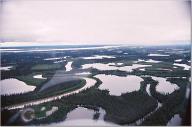
Mackenzie River delta and estuary biogeochemistry
Quantifying nutrient and mercury transport through the Mackenzie system and the role of delta lakes and estuaries.
Mercury loading experiments
Assessing how atmospheric mercury deposition influences methylmercury accumulation in freshwater ecosystems.