|
DKC MacDonald Memorial Lecturer
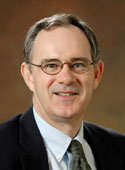
Dr. Ian M. Robertson
Department Head, Donald B. Willett Professor of Engineering, Professor of Materials Science and Engineering, Department of Materials Science and Engineering, University of Illinois at Urbana-Champaign Professor Robertson received his B.Sc. degree in applied physics from the University of Strathclyde, Glasgow, Scotland, in 1978 and his D.Phil. in metallurgy from Oxford University, England, in 1982. He joined the faculty at UIUC in 1983. In 1984 he shared, with Professor H. K. Birnbaum, the Department of Energy Outstanding Science Award in Metals and Ceramics. Professor Robsertson's research program focuses on understanding the basic processes controlling the mechanical response of materials exposed to extreme conditions. Particular programs include the mechanisms of strain transfer across interfaces, dynamics of deformation and fracture in aggressive and non-aggressive environments, superplasticity, deformation mechanisms under extreme conditions and deformation in nanograined materials. A common theme among these areas is that the experiments are performed in situ in the transmission electron microscope. This approach provides information in real time at high spatial and temporal resolution. Molecular dynamics computer simulations are used to provide insight at the atomistic level to the dynamic interaction of dislocations with obstacles. This information is then used as the foundation for developing predictive plasticity models.
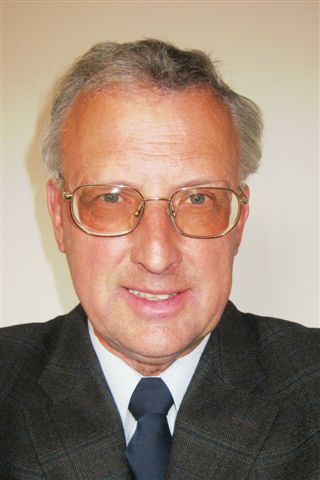
Mackiw Lecturer Dr. Derek Kerfoot
Head - Hydrometallurgy, INCO Technical Services Limited 2060 Flavelle Boulevard, Mississauga, Ontario L5K 1Z9, Canada Profile DPhil in Inorganic Chemistry from the University of Oxford, UK. Worked in hydrometallurgical process research and engineering for Inco Limited, Noranda Research and Seltrust Engineering before joining Sherritt Gordon in 1979. Abstract: The Application of Aqueous Ammonia Chemistry to the Refining of Nickel and Cobalt Sulphides Vladimir Mackiw played a leading role in the technical development of the Sherritt Gordon Ammonia Pressure Leach Process, which is still operating after more than 50 years in Fort Saskatchewan. This process was one of the earliest, and is arguably the most successful, application of pressure hydrometallurgy to base metal processing. In its ability to refine nickel sulphide concentrates directly to refined nickel, without the intermediate smelting step, the Sherritt process was many years ahead of its time. The lecture will trace the historical development of the Ammonia Leach Process for the treatment of nickel sulphide concentrates, in terms of its chemistry, from the initial laboratory work at UBC, through the pilot testing in Ottawa, to its successful implementation in the Sherritt Nickel Refinery in Fort Saskatchewan. Over the first thirty five years of operation, the feed to the refinery was expanded to include low-copper and low-cobalt nickel mattes and nickel sulphates, but the process was very limited in its ability to process cobalt-containing feed stocks. In the early 1990s, the reduced availability of the traditional nickel feed stocks, combined with the expected availability of a nickel-cobalt sulphide precipitate feed from Cuba, prompted a re-examination of the chemistry of the nickel and cobalt ammines in the ammonia pressure leach, in the hope of adapting the process to handle high cobalt content feeds. As the understanding of the ammine chemistry in the pressure leach improved, new flow sheet options were recognized, leading ultimately to the successful development of a novel and commercially attractive cobalt refining circuit, fully integrated with the existing nickel refinery. This process was adopted by the Refinery and has been in operation for the past fifteen years, producing high quality cobalt powder at one of the industry’s lowest production costs. The chemical aspects of the development of this process will be discussed. |
|||||||||||||||||||||||||||||||||||||||||||||||||||||||||||||||||||||||||||||||||||||||||||||||||||||||||||||||||||||||||||||||||||||||||||||||
















Copyright © 2008 CMSC |