|
Outline
Audience
Registration
Speakers
Talks
Contact
|
 |
Machine Learning (ML) is generally considered to be a disruptive technology. ML-based methods have received growing interest due to the increasing availability of data and the success of ML applications for complex problems. In the automotive sector, various studies can be found on applications in computer vision, autonomous driving or logistics and traffic planning. For vehicle applications, ML is also believed to dramatically reducing the development time and costs, to enhancing safety and to reducing energy consumption and emissions. However, this is an emerging field and only limited studies are found so far.
This workshop aims to address the potential and experienced challenges of ML-based concepts for automotive vehicle systems. It will create an inspiring discussion platform to bring together experts from relevant disciplines and helps to create new collaborations and to direct future research.
Date: Sunday, June 15, 13:00-17:00
Organizers:
- Prof. Mahdi Shahbakhti, University of Alberta
- Prof.dr.ir. Frank Willems, Eindhoven University of Technology
* Contact: mahdi@ualberta.ca
|
Automotive AI-powered Control Technologies
|
Today’s automotive control development relies on traditional map-based and model-based control approaches. Due to the growing system complexity and real-world performance requirements, these expert-intensive and time-consuming approaches will lead to exploding development time and costs. Consequently, automotive control development is facing a turning point in the near future.
Machine Learning (ML) is a disruptive technology, which offers powerful features to address these challenges. To significantly reduce the time, cost, and effort required for automotive control development, ML methods offer opportunities to:
- Create dynamic models for complex systems or needed in predictive control approaches such as model predictive control (MPC);
- Efficiently parametrize control models;
- Design of supervisory learning-based controllers;
- Design of real-world test cycles for automated testing in the laboratory;
- Anomaly and fault detection and diagnostics.
Utilizing ML along with cloud computing and vehicle to infrastructure (V2I) communications enables even further reductions as well as improved real-world performance. For example, fleet data can be used to enhance vehicle individual as well as fleet performance. Also, cloud-based system architectures open opportunities to solve complex and computational demanding optimization problems.
Currently, limited results are published on ML-based methods for powertrain and vehicle applications. There is clearly a need to demonstrate the potential, limitations and challenges of these promising methods. This will concretize the anticipated ML benefits and accelerate industry adaption of Machine Learning. We target high quality presentations of international experts that i) introduce new ML-based automotive vehicle applications; ii) specify the performance benefits; and iii) deal with implementation challenges in real-world.
This workshop is planned for PhD students as well as professionals with a basic background in automotive control. Do you want to learn about the latest developments and trends on AI applications in the automotive domain? Are you curious about the potential and challenges to apply automotive AI-technologies on the road? This workshop will cover these topics and offers you a platform to discuss with academic as well as industrial experts in the field.
Attendance is only possible upon registration. This mandatory registration can be done here. Please note that the tutorials are subject to cancellation in case of lack of registrants and allow a maximum number of participants.
Speakers / Organizers
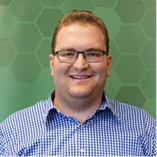
Dr. David Gordon is an Assistant Professor in Mechanical Engineering at the University of Alberta. He completed his PhD at the University of Alberta in 2023 and then completed a Mercator Fellowship at RWTH Aachen University. His research centers in the area of mechatronics, with a focus on both the simulation and experimental application of artificial intelligence (machine learning) strategies and optimal control to a range of power conversion systems. These include a wide range of applications including gasoline, diesel and Hydrogen combustion engines, electric machines and hydrogen fuel cells are considered. He is an expert in control systems, energy conversion, combustion engines, fuel cells, and machine learning.
|
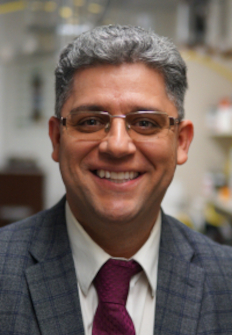
Mahdi Shahbakhti is a Professor of Mechanical Engineering at the University of Alberta in Canada. He was previously a faculty member at Michigan Tech University (2012-2019), a post-doctoral scholar at the University of California-Berkeley (2010-2012) and received his PhD in Mechanical Engineering from the University of Alberta in 2009. His research has centered on developing data-driven/physical dynamical models and AI-based optimization, diagnostics and control techniques with applications in connected and automated vehicles, fleet vehicles, and vehicle powertrain systems. He has co-authored more than 240 peer-reviewed publications in the field of controls and automotive/energy systems. Dr. Shahbakhti is the former chair (2020-2022) of ASME Dynamic Systems Control Division (DSCD) Automotive and Transportation Systems Technical Committee and the former chair (2018-2020) of Energy Systems Technical Committee. He is currently the Technical Editor of IEEE/ASME Transactions on Mechatronics and previously served as the Associate Editor for ASME Journal of Dynamic Systems, Measurement, and Control (2017-2023), and the International Journal of Powertrains (2014-2020).
|
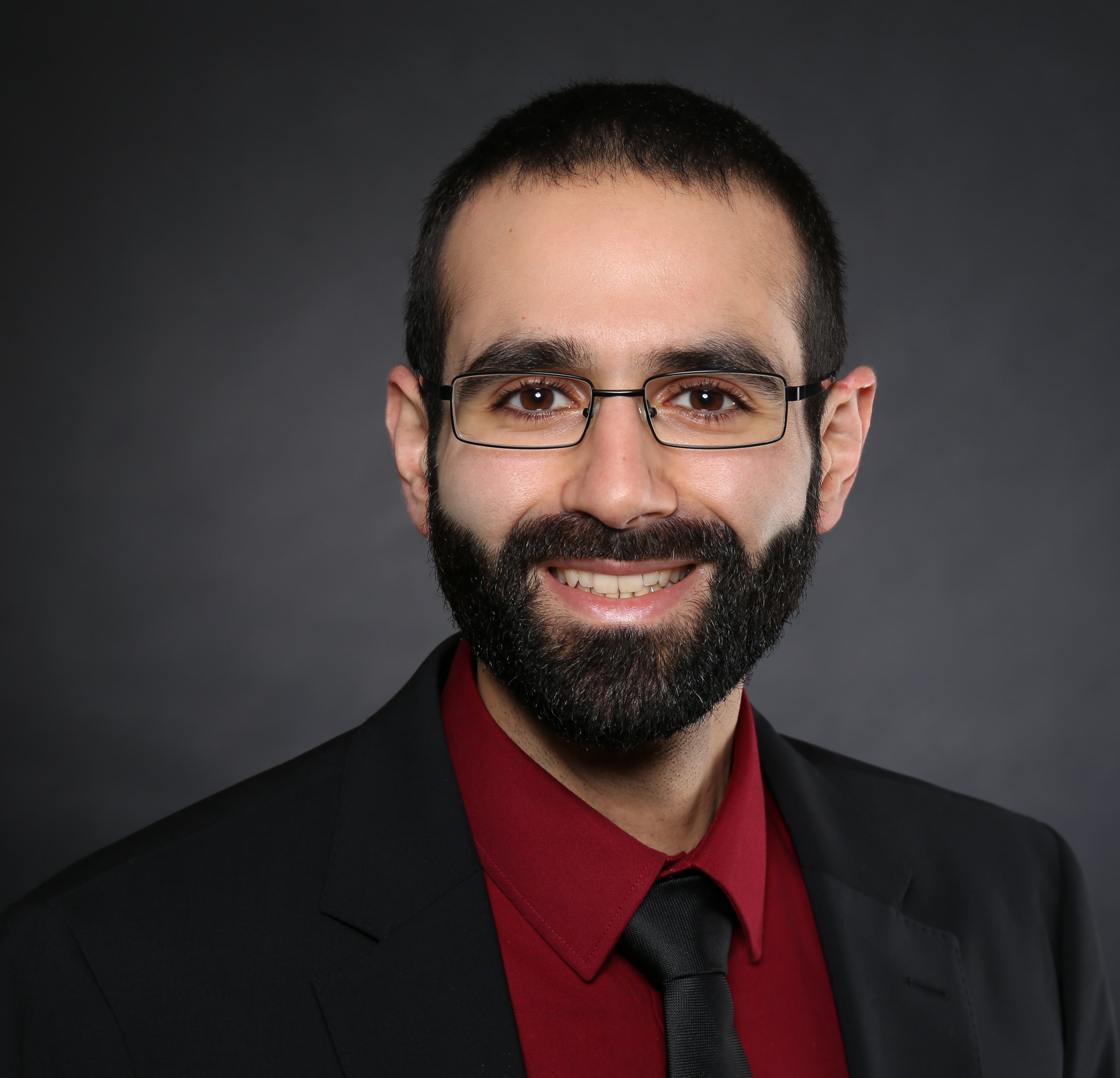
Kevin Badalian received his B.Sc. degree in computer science from RWTH Aachen
University, Germany, in 2020. That same year he joined the Teaching and Research
Area Mechatronics in Mobile Propulsion (MMP) at RWTH Aachen University as a
programmer. His work focuses on simulations and the application of reinforcement
learning (RL) in automotive engineering. Mr. Badalian is the main developer of
MMP’s open-source RL framework LExCI which has been employed by him and his
colleagues for a number of scientific publications in the context of vehicle and
engine control.
|
Dr. Johan Dahl received his M.Sc. degree in Electrical Engineering 1999 and Ph.D. in Automotive Control, 2004, both from Lund University.
His main research interest is in modeling and control of internal combustion engines including aftertreatment and how engine and aftertreatment interacts with other systems in a vehicle to achieve sustainable and efficient transport.
|
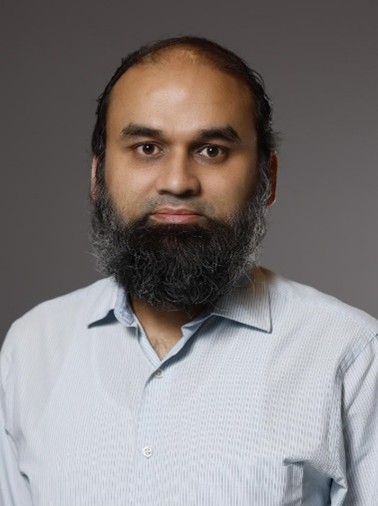
Qadeer Ahmed is an Assistant Professor and director of Mobility Systems Lab (MSL) at the Department of Mechanical and Aerospace Engineering at The Ohio State University and a fellow of OSU’s Center for Automotive Research. His research focus is connected, automated, safe, and energy-efficient vehicular/mobility systems. He has authored more than 127 international peer-reviewed publications. He has also served as Editor for IFAC Advances in Automotive Control 2022 and is associate editor of IEEE Transactions on Transportation Electrification and IEEE/ASME Transactions on Mechatronics. He is a recipient of SAE’s Ralph R. Teetor Educational Award in 2023, SAE's L. Ray Buckendale Award in 2019, and OSU’s Lumley Research Award in 2018.
|
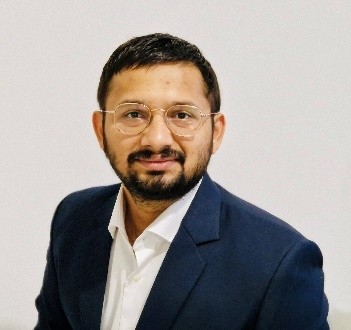
Prasoon Garg is a Control Function Design Engineer at Engine Integration Department at DAF Trucks N.V., where he is working on developing control concepts for future generations of heavy-duty diesel engines. He received a PhD degree in Machine Learning for automotive powertrain control development from Eindhoven University of Technology (TU/e), the Netherlands in 2024. In 2019, he earned his MSc degree in Automotive Technology from TU/e. During his PhD research, he developed new control methods for Self-Learning powertrains using Machine Learning. His expertise lies in powertrain modeling and control, data-driven modeling and control, Supervised Learning, Reinforcement Learning and on-board diagnostics.
|
| Time |
Topic |
Speaker |
Affiliation |
| 13:00 |
Welcome and Introduction |
Organizers |
Eindhoven University of Technology; University of Alberta |
| 13:10 |
Machine Learning and Model Predictive Control for automotive applications |
David Gordon |
Univ. Alberta, Canada |
| 13:50 |
AI-enriched monitoring and optimization of fleet vehicles |
Mahdi Shahbakhti |
Univ. Alberta, Canada |
| 14:10 |
From Virtual to Real-World Deployment: Reinforcement Learning for On-Vehicle Training |
Kevin Badalian |
RWTH Aachen, Germany |
| 14:30 |
Coffee break |
- |
- |
| 15:00 |
AI-powered technology in automotive applications |
Johan Dahl |
Volvo, Sweden |
| 15:20 |
Learning from powertrain to enhance its performance |
Qadeer Hamed |
Ohio State Univ., USA |
| 15:40 |
Automated Calibration of a Vehicle Thermal Management System using Safe and Time-Efficient Reinforcement Learning |
Prasoon Garg |
DAF Trucks, Netherlands |
| 16:00 |
Panel discussion |
All speakers |
- |
| 16:30 |
Concluding remarks |
Organizers |
- |
back to top
|
|
|
|