
|
Phenology of aspen |
|
RenR480 Course Project |
|
Introduction |
|
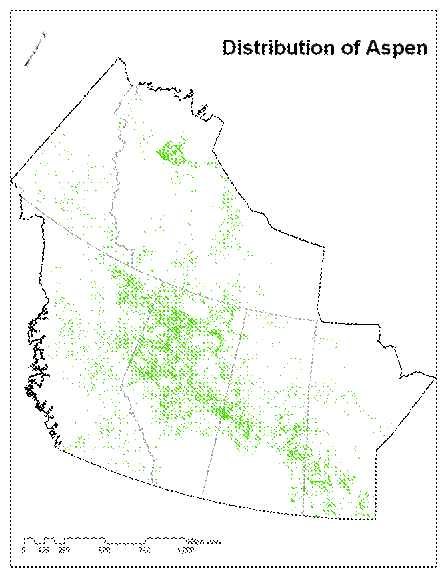
Background & Rational Phenology process is a temperature-sensitive biological processes (Johnson & Thornley, 1985). Global change increased more mean temperature in high latitude region than lower region, which changed the timing of budburst or blooming of plants. Cannell & Smith (1986) discovered higher temperate did not means the early bud burst, because most temperate trees required chilling period to release winter dormancy. Therefore, the warmer climate may vary the chilling period which could cause the early, later budburst or nothing changed. Recently research found earlier plants’ flowing, include aspen, in Alberta (Beaubien & Freeland, 2000). It may imply the earlier bursting. It still has the possibility same as chilling period for temperate trees that timing of budburst was linked to some climate parameters. How does the aspen react to the global change is the question will be examined this in research. Research Sites American Aspen (Populus tremuloides), the major deciduous tree spread entire of North America. This research interests all the aspen in west Canada (Fig. 1). Sampling sites are spread from north BC to the south SK (from 123 ̊29’W, 58 ̊40’N to 105 ̊36’W, 52 ̊11’N). Most of them are living in the east of Mount Robson. |

|
Research Objectives Both the information of spatial and tempera distribution of phenology are important for studying the genotypes difference. Genotypes at same place are always have high similarity. Spatial distribution may contain the information of genotypes’ difference. Timing of budburst in each year, according to the former research, is affected by climate condition. But the mechanical of the reaction, especially for aspen, is not quantitatively described even not clear. This research is going to answer these questions by archiving two objectives: 1, Investigate how genotypes differ in timing of aspen budburst; 2, figure out functions for temperature and timing of budburst.
Research Approach To predict the budburst, it requires a field observation data. These data will be obtained from the field trial. After regressing with climate data, the result will apply to discover the biological mean. Once objectives were achieved, we will use the function to predict the change in future or represent what had happen before; future more, we will compare the result with other data source or method to decide the best method for tracking phenology.
|
|
Fig. 1 Distribution of Aspen in west Canada |