
| TTI Home · Projects · Classroom Technologies · Resources · Our Teams · Upcoming Events |
2006 Project Report
Health Promotion Studies 507 – Public Policy and Health Promotion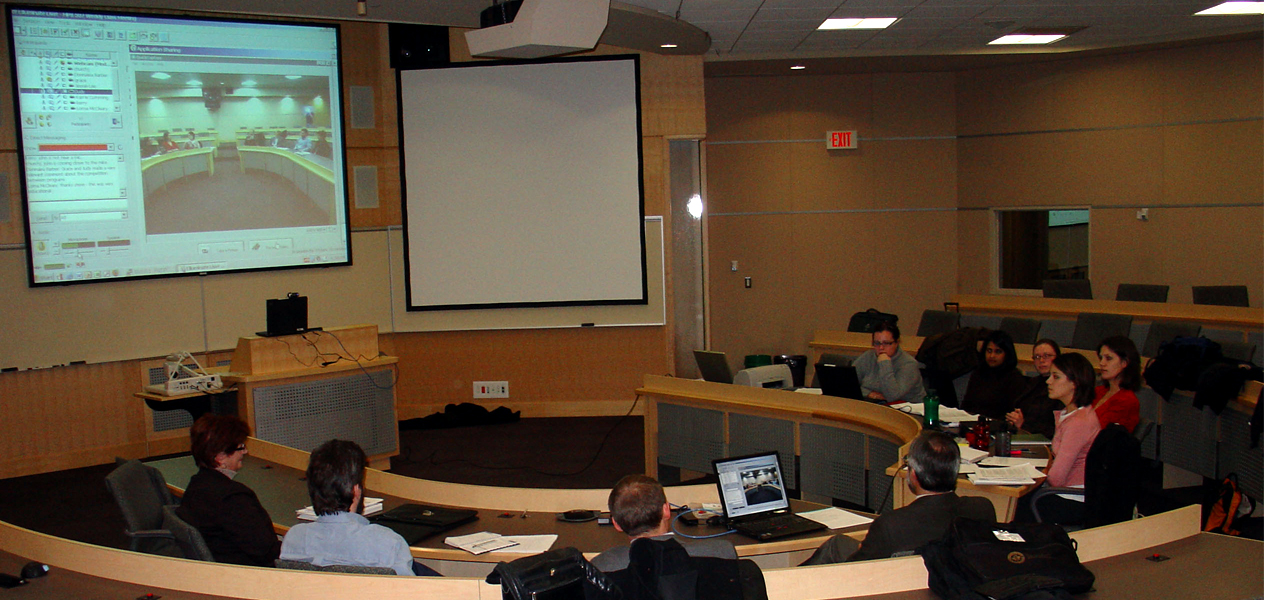
Class Situation
The main challenge presented in such a blended course situation was to make the technology as transparent as possible and provide both local and distance students with similar classroom experiences. In order to accomplish this goal, several classroom technologies were utilized in an effort to integrate the student cohort as much as possible. A TTI assistant was responsible for managing all the technology and monitoring it during each week’s class as well as providing ongoing support for all technological components. Technology Components
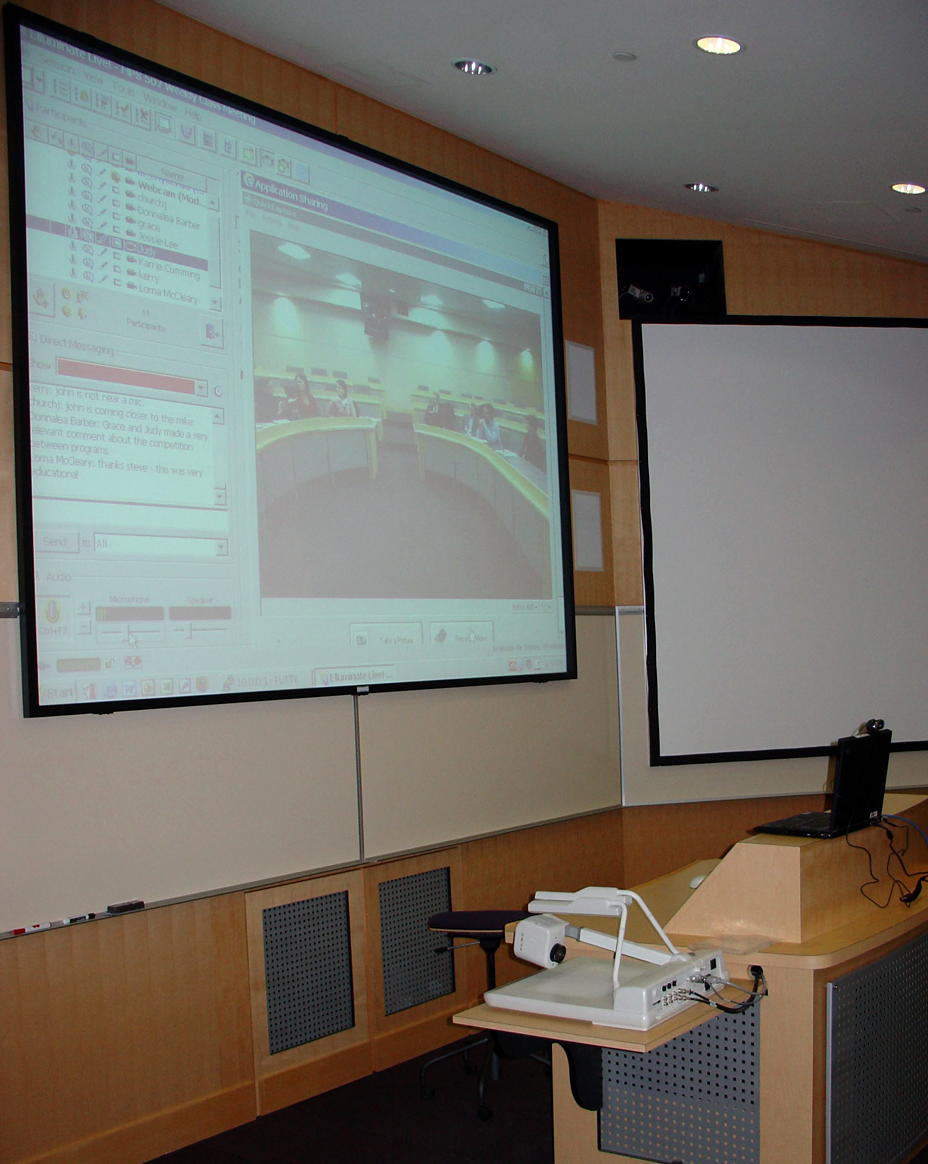
2) Elluminate was the meeting software used to broadcast the lecture to all distance students as well as to allow distance learners to communicate vocally with the class. Elluminate meetings do provide a small text chat area, but its use was discouraged as Dr. Church wished the students to speak as they would in a normal class. Asking questions was aided by the “raise hand” feature which alerted the classroom lecturer that a distance learner had a question. Such a feature was important as simply talking could cause confusion due to a communication delay of several seconds. Each week’s meetings were saved as a file which could be later reviewed by each student on their own time.
4) Laptops were provided to the classroom participants during two classes of a simulation exercise. Students had been divided into two separate groups, Board and Management, and were to work together in order to implement a budgetary framework for a simulated health region. As Board and Management needed to converse with each other privately and both consisted of local and distance learners, text communication was used to provide a private means of chatting. Several breakout periods also occurred with one group leaving to a nearby seminar room and using a different Elluminate meeting for their own purposes. |
|
Copyright © 2006 University of Alberta. All rights reserved.
Search · Contact Us · Site Map |
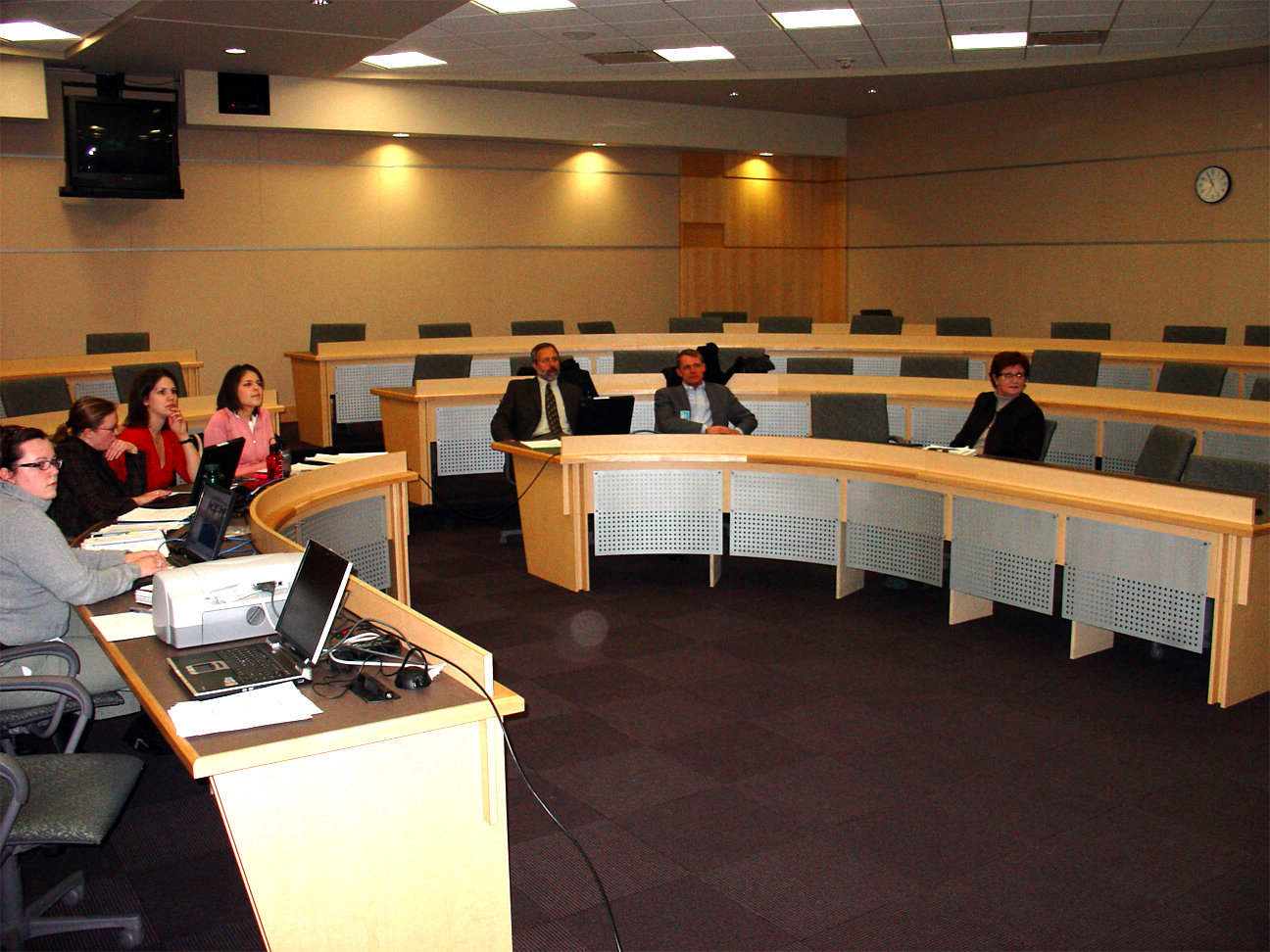 The class makeup of HPS 507 had a total of five classroom based students and six students participating from a distance. The student furthest away from the University of Alberta was based in Belgium.
 1) WebCT formed an electronic foundation for much of the course’s out of class component. Each week readings and discussion topics were posted in a “Weekly Activity” section. This area also contained any weekly Power Point presentations that may have been used in the class. Each week also had a dedicated discussion forum thread in which student could make long comments on weekly questions as well as participate in an ongoing conversation with other students.
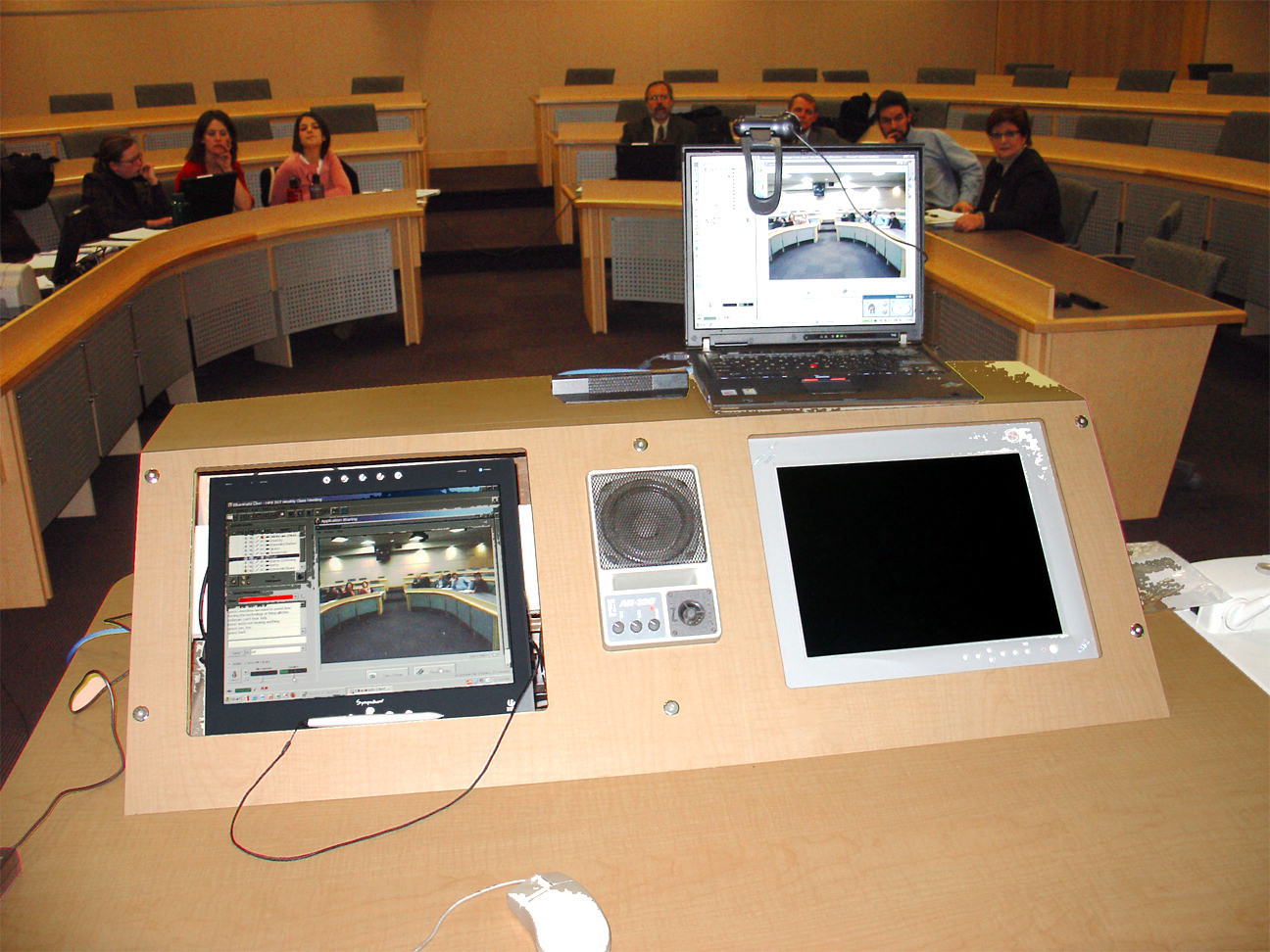 3) From the middle of the course a web camera was used in order to broadcast a visual element to all distance students. While Elluminate has a built-in video sharing feature, it has limited quality. Instead Logitech’s native camera software was used and shared to all meeting participants through Elluminate’s application sharing feature.