
Distinguished Visitor: Professor Michael Lynch, Cornell
University
The University of Alberta is pleased to host Michael Lynch, Professor
of Science and Technology Studies at Cornell University, as a distinguished
visitor. Prof. Lynch is internationally recognised as a key scholar in the
fields of science and technology studies, discourse, ethnomethodology and
visual representation. His work has been essential to theorising approaches to
understanding the production of knowledge through the study of ordinary action,
and to pioneering empirical research in the laboratories, clinical settings and
legal environments where science and expertise take place.
Prof. Lynch is a widely cited and award winning writer. He is the author of
“Scientific practice and ordinary action: Ethnomethodology and social
studies of science, for which he won the Robert K. Merton Professional award
from the Science, Knowledge and Technology Section of the American Sociological
Association. He is also the author (with Cole, McNally and Jordan) of
“Truth Machine: The Contentious History of DNA fingerprinting”;
winner of the Distinguished Publication Award from the
Ethnomethodology/Conversation Analysis section of the American Sociological
Association.
In addition, Prof. Lynch has been the long-time editor of Social Studies of
Science (finishing his term this September), and is the former President of the
Society for Social Studies of Science (4S).
PROGRAM OF
EVENTS
During his visit to Edmonton and the University of Alberta Prof. Lynch will be
conducting a series of lectures, seminars and research workshops. University
staff and students, as well as members of the wider community are invited to
join the following activities.
Seminar: Science, Expertise and the Law
September 10, 2012 1-3pm; Edmonton Clinic Health Academy (ECHA); Room 2-420
Based on his widely praised book ‘Truth Machine: the Contentious History
of DNA fingerprinting’, Prof. Lynch will speak about the difficult
intersections between science, expertise and the law. His research points to
the many contradictions in the ways in which we think about DNA technologies as
objective ‘truth machines’ and the distinctly human activities
of evidence making in the courtroom. The seminar is an opportunity for scholars
and students in criminology, law and science & technology studies to
explore the ways in which evidence and technology are performed and contested in
practical contexts. Following a brief presentation by Prof. Lynch, Prof. Kevin
Haggerty (Sociology) will facilitate an engagement between the author and
seminar participants.
Registration is limited. To register please e-mail Bryan Sluggett at sluggett@ualberta.ca
|
Public
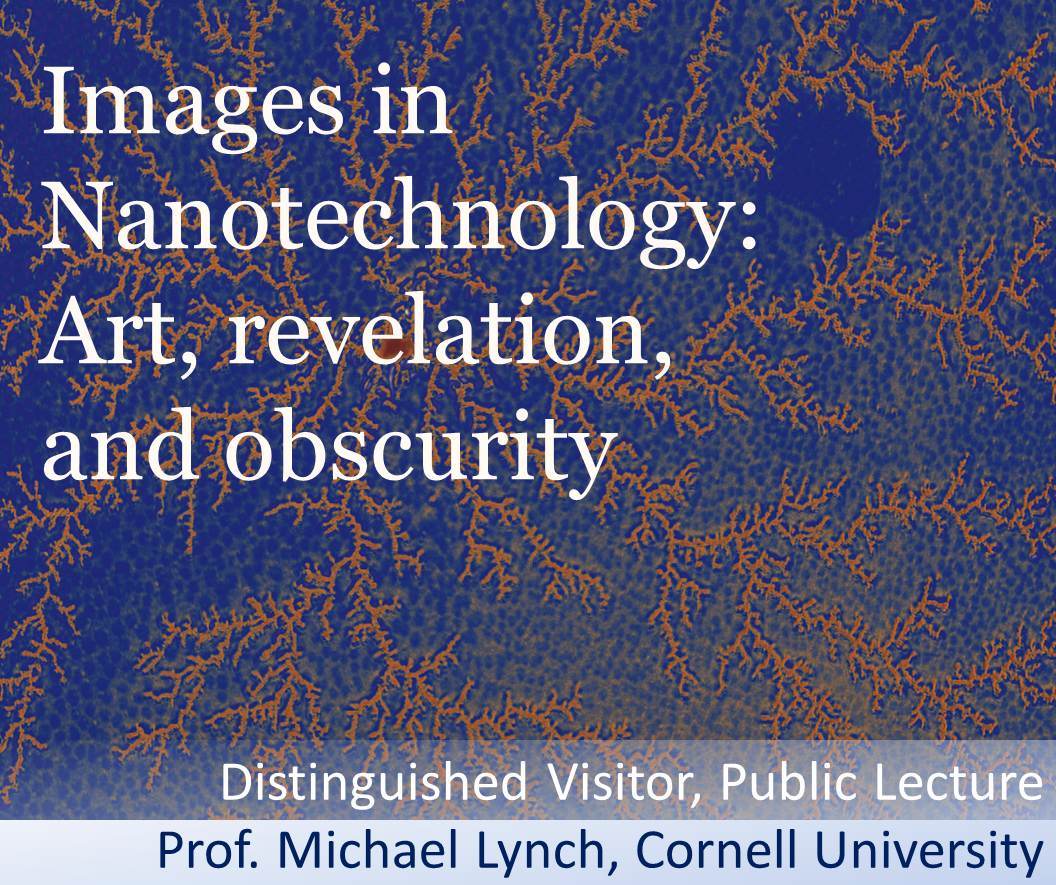
Lecture: Images in Nanotechnology: Art, Revelation and Obscurity (POSTER) |
|
Workshop: Researching science and expertise as practice and ordinary
action
September 13, 2012; 2-4pm; ECHA 1-457
This workshop is intended for those interested in researching the production of
knowledge, science and expertise in practice. Drawing on Prof. Lynch’s
extensive methodological background in the field of ethnomethodology and the
study of discourse and social interaction, this workshop is an opportunity for
staff and graduate students to explore these methods in their own research.
Registration is limited. To register please e-mail Bryan Sluggett at sluggett@ualberta.ca
Opportunities to meet Prof. Lynch.
September 14, 2012; 9-11am
Prof. Lynch will be available to meet University staff and graduate students on
an individual basis on the Friday morning of his visit. If you would be
interested in booking an appointment please contact Dr. Kevin Jones at
k.e.jones@ualberta.ca
LOCATION
AND DIRECTIONS
All events are being held at the Edmonton Clinic Health Academy (ECHA). A new
addition to the University of Alberta Campus, the ECHA is located at the corner
of 114 Street and 87 Avenue and is accessible from the Health Sciences LRT
station.
For further information about these events or Prof. Lynch’s visit to the
University of Alberta please contact Dr. Kevin Jones: (k.e.jones@ualberta.ca; 780-910-2878).
THANKS
These events are being supported by the University of Alberta Distinguished
Visitor Program; the Office of Interdisciplinary Studies, Faculty of Arts;
Situating Science; and the City-Region Studies Centre.
