Kim Chow - Research
 |
 |
|
Graduate student position in Kim Chow's group available
(see Team link on left).
Go to Kim Chow's home page:
HOME
Research Programs:
We are interested in (i) basic science and (ii) applications.
Our extremely active research programs are aimed at understanding
and manipulating the
electronic, magnetic, and optical properties of bulk and nanoscale materials.
In one experiment, we might be probing the nature of a single isolated atom in materials,
while in another experiment,
we are controlling the macroscopic properties of an interesting solid state sample.
We work hard, try to have fun, and publish often
(see Publications link on left).
Collectively, these studies address many of the major current
issues in Solid State Physics and Materials Science, including:
- semiconductor physics,
- strong correlations in quantum materials,
- superconductivity,
- magnetism,
- spintronics,
- quantum information,
- nanoscience.
Materials:
We investigate many important solid state systems, including
- semiconductor systems and heterostructures,
- colossal magnetoresistive materials (CMR),
- high temperature superconductors,
- molecular nanomagnets, magnetic multilayers, photomagnets,
- magnetic systems with competing interactions,
- thin metal films.
Where do the materials come from?
Some come from internationally renowed sample makers, while others are
synthesized by members of our team.
Techniques:
We use a number of powerful techniques:
- muon spin rotation,
- β-detected NMR and NQR,
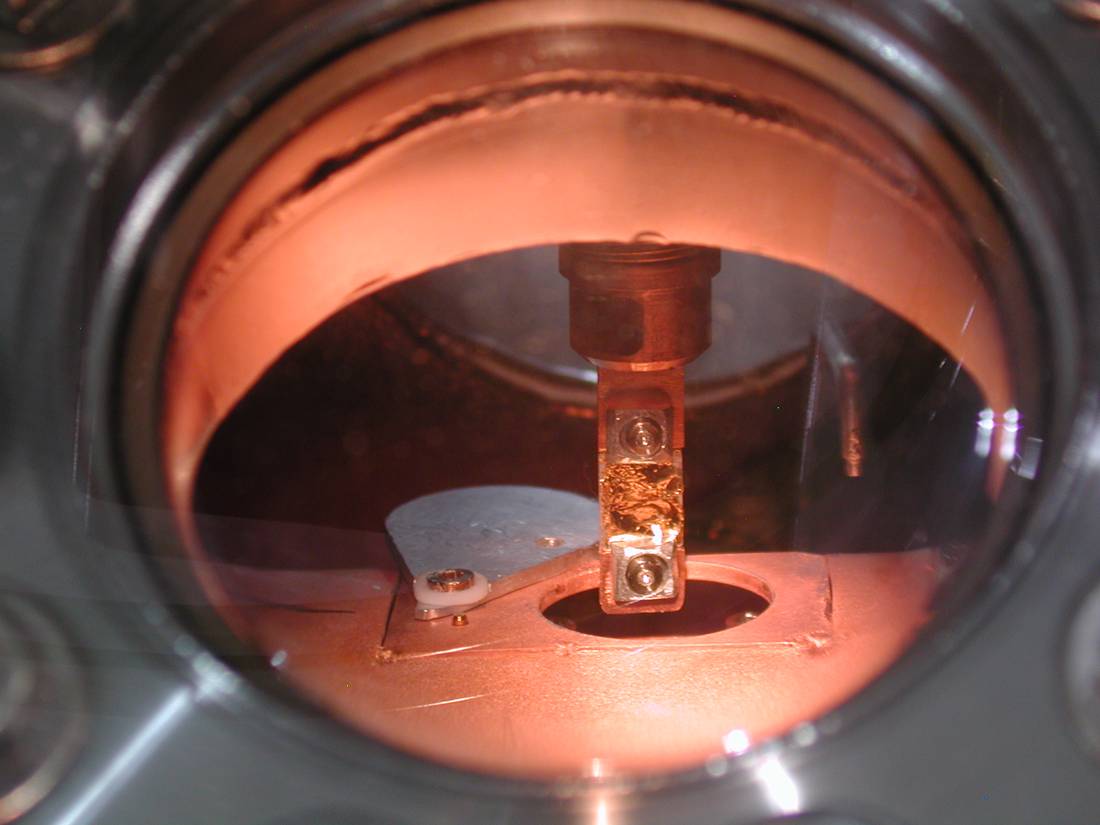
- solid-state magnetic resonance,
- magnetoresistance
- optical spectroscopy (e.g. electroluminescence, photoluminescence, etc.).
Where?
Our research is mainly carried out at two locations:
(a)
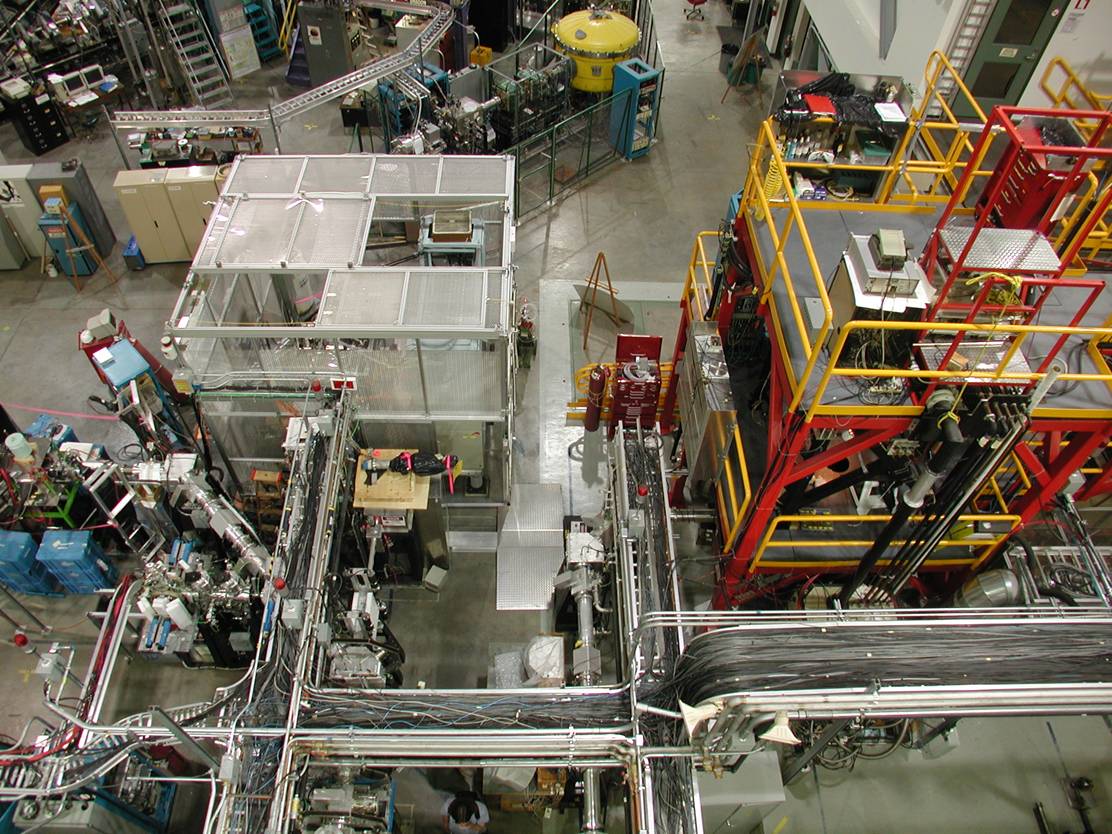
TriUniversity Meson Facility (TRIUMF) in Vancouver,
the only facility of its kind in the Western Hemisphere, where
we are able to carry out μSR
and
βNMR studies,
and
(b) the Magnetic Resonance and Optical Spectroscopy (Dr. Kim Chow) and
Magneto-Transport & Superconductivity
(Dr. Jan Jung)
laboratories in the U of A Physics Department.
Our research often involves collaborative efforts with scientists based locally,
nationally, and internationally.