In Dutch, Kuiken
means “chick.” It is a diminutive term, roughly equivalent to “little chicken”
in English (although the last syllable in the English word “chicken” mimics the
Germanic diminutive suffix, “-chen”). With such
humble connotations, it is not obvious that the name Kuiken
has aristocratic origins. At the risk of creating yet another “noble”
historical resurrection from a peasant family’s “exile,” the historical
fragments are as follows. Kuik is a village name;
there is a Kuik (Cuijk)
southeast of Nijmegen and a Nieu Kuik
near Dordrecht, either of which may have played a role in the emergence of this
family name[1].
The village name, Kuik, was borrowed as a family name
in the late 15th Century, when children of the Hapsburg Lord Wassenaar’s three marriages disputed his inheritance.[2]
The children of one branch of the family were denied lands in the officially
assigned and defended region (the region that includes Wassenaar,
Leiden, and Sassenheim),
motivating them (Steven Willems [born in 1475], Bartholt Willems [born in 1480],
Cornelius Willems [born in 1485] and Claas Willems [born in 1490]) to
set out for what was then the frontier, the polder in Friesland, and settle in St. Jacob Parochie
(Sint Jacobparochi), near
the villages of St. Anna Parochie (Sint Annaparochie) and Vrouwenparochie.[3]
The polder, the land behind the then regularly expanding system of dikes, was
provincially owned, and tax breaks were given to settlers there for a number of
years. Claas Willems
adopted the name “Kuiken” to differentiate this
“exiled” family from the other Wassenaar disputants.[4]
 Although the family geneology is continuous and more-or-less identifiable,[5]
the Kuiken name initially was used only as necessary.
It had no official standing until the French, who dominated the Lowlands at that time, required
the adoption of a last name that remained the same across generations.[6]
In compliance, in 1811 Marten Arjens (born in 1777)
officially became Marten Arjens Kuiken.
Marten’s son, Folkert Arjens
Kuiken (born in 1802), was, in turn, father of
Douwe Folkerts Kuiken, who is Marilyn’s, Janice’s, and Don’s
great-grandfather.
Although the family geneology is continuous and more-or-less identifiable,[5]
the Kuiken name initially was used only as necessary.
It had no official standing until the French, who dominated the Lowlands at that time, required
the adoption of a last name that remained the same across generations.[6]
In compliance, in 1811 Marten Arjens (born in 1777)
officially became Marten Arjens Kuiken.
Marten’s son, Folkert Arjens
Kuiken (born in 1802), was, in turn, father of
Douwe Folkerts Kuiken, who is Marilyn’s, Janice’s, and Don’s
great-grandfather.
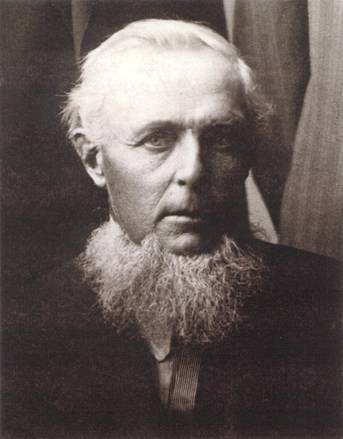
So, Douwe Folkerts Kuiken (left) was born
(March 10, 1849) in St. Anna Parochie (St. Anna's
Parish), Friesland, Netherlands, to Folkert Arjens Kuiken
(occupation: farmhand) and Pietje Joukes (Schat) Kuiken. Pietje married Pieters Haarsma after Folkert died and when Douwe was
eight years old, beginning a tradition of Kuiken
fathers who died young and required their sons to make early life adjustments.
At age 14, Douwe went to work as a farmhand, and
later he became a gardenier, i.e., a farmer who
either rented or owned a few hectares. Army records, diligently kept in the
style established by the conquering French, indicate that Douwe
was Nederlandische Reformed and that he joined the
militia at 19 years of age (1869-1874)—although his older brother also had met
this requirement of another French “innovation” in the area: conscription.[7]
Douwe was brother to five siblings:
- Arjen Kuiken, son born 23 August 1838
- Jouke Kuiken, son born 15 November 1840
- Marten Kuiken, son born 13 September 1843
- Rinze Kuiken, son born 23 July 1846
- Renske Kuiken, daughter born 22 May 1852
Only Jouke,
Marten, and Douwe survived beyond childhood.
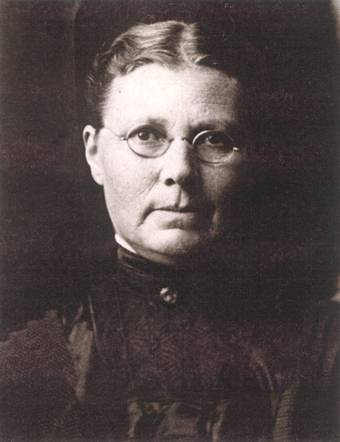 Gepke Porte was also born (April 2, 1861) in St. Anna Parochie
(St. Anna's Parish), Friesland, Netherlands. Her father was Jacob Jans Porte
(occupation unknown) and her mother was Grietje
Berends Snijder (who worked as a maid); both were
born and died in unidentified locations in The Netherlands.
Gepke Porte was also born (April 2, 1861) in St. Anna Parochie
(St. Anna's Parish), Friesland, Netherlands. Her father was Jacob Jans Porte
(occupation unknown) and her mother was Grietje
Berends Snijder (who worked as a maid); both were
born and died in unidentified locations in The Netherlands.
Gepke Porte and Douwe Kuiken
were married on May 8, 1884.
At the time of immigration, this couple
already had three children:
1.
(Nellie) Pietje
Kuiken, daughter, born June 26, 1885, in St. Anna Parochie;
2.
Jake (Jacob) Kuiken, son, born March 5, 1887, in
St. Anna Parochie; and
3.
Frank (Folkert)
Kuiken son, born March 9, 1888, in
St. Anna Parochie.
Jacob (Jake) was Clarence Kuiken’s father, i.e., Marilyn’s, Janice’s, and Don’s
grandfather.
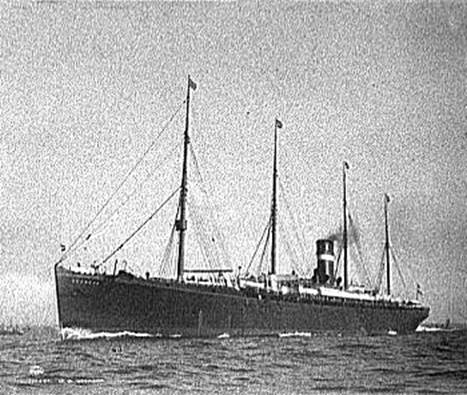 This is the Veendam, the ship that carried Douwe
and Gepke Kuiken, with
their family, from Rotterdam to New York, arriving May 2, 1889. The circumstances
surrounding immigration are largely unknown, although they are probably
primarily economic: the preceding decade was marked by a depressed economy in Europe. Douwe
was probably among the many tenant farmers or small land owners who lost the
source of their livelihood in the preceding decade. Although these economic
circumstances coincided with the split of the Christian Reformed Church from
the Nederlandische Reformed Church in the 1870’s, Douwe, who remained officially Nederlandische
Reformed, probably immigrated for economic reasons at least as much as
religious ones.[8]
This is the Veendam, the ship that carried Douwe
and Gepke Kuiken, with
their family, from Rotterdam to New York, arriving May 2, 1889. The circumstances
surrounding immigration are largely unknown, although they are probably
primarily economic: the preceding decade was marked by a depressed economy in Europe. Douwe
was probably among the many tenant farmers or small land owners who lost the
source of their livelihood in the preceding decade. Although these economic
circumstances coincided with the split of the Christian Reformed Church from
the Nederlandische Reformed Church in the 1870’s, Douwe, who remained officially Nederlandische
Reformed, probably immigrated for economic reasons at least as much as
religious ones.[8]
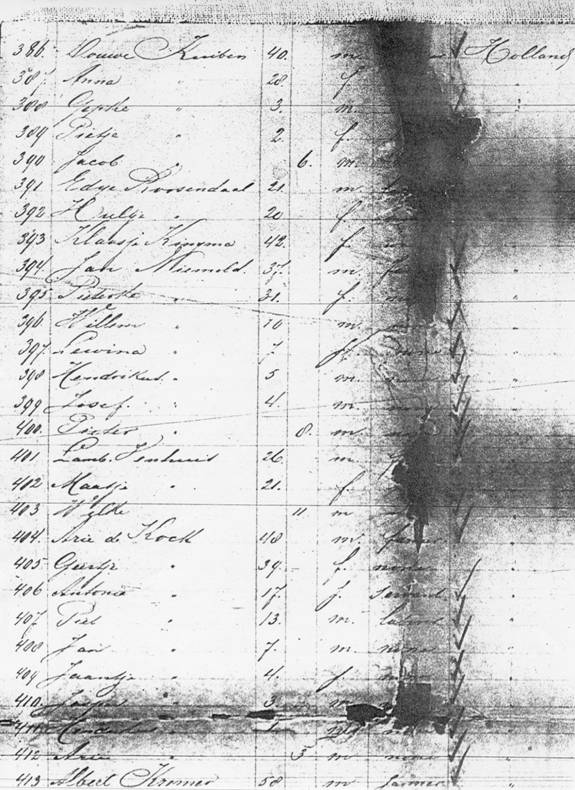
This is the ship’s log for the Veendam, clearly confused about names and ages, although
correct about the size of the family and the father of the family.
The Kuiken family
moved directly to Maurice, Iowa, settling in a Dutch-American community in
Sioux County that included some who had left Pella, Iowa, and some who were new,
but also primarily Dutch, immigrants.
Douwe Kuiken died in Maurice on November 21, 1914, at the age of 65 years. He was buried in the Sherman Township
cemetery near Maurice.
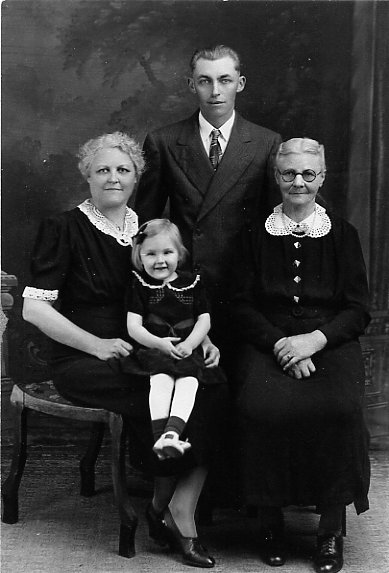 This is a four-generation
photograph of Gepke (Porte) Kuiken,
with her daughter Nellie (Kuiken) vander
Meulen, her grandson Raymond vander
Meulen, and her great grand-daughter Nelbia vander Meulen.
(After the death of Douwe, she remarried twice, first
to John Reekers and second to Jacob Borgman.)
This is a four-generation
photograph of Gepke (Porte) Kuiken,
with her daughter Nellie (Kuiken) vander
Meulen, her grandson Raymond vander
Meulen, and her great grand-daughter Nelbia vander Meulen.
(After the death of Douwe, she remarried twice, first
to John Reekers and second to Jacob Borgman.)
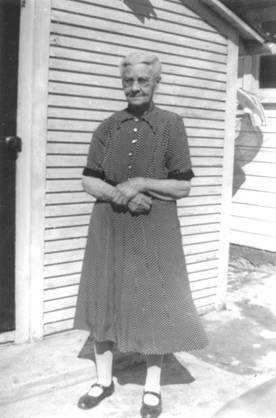 Gepke, died on August 9, 1954, in Maurice, Iowa, at the age
of 93. She outlived her three husbands and all of her brothers and sisters.
Gepke, died on August 9, 1954, in Maurice, Iowa, at the age
of 93. She outlived her three husbands and all of her brothers and sisters.
[1] Given its proximity to the feudal trade routes defended by the Wassenaar family (i.e., to the present cities of Wassenaar, Leiden, and Sassenheim), Dordrecht is the more likely immediate source.
[2] The inheritance was probably considerable. In establishing their
nobility, the Wassenaar family collected taxes and
defended trade routes in the established feudal manner.
[3] There are few Catholics remaining in the area, although the saintly
names of the three villages in the area (including St. Jacob Parochie and St. Anna Parochie)
reflect the Catholic origins of those who built the dikes, rather than the
religion of those who settled in the region. Also, although located in Freisland, Dutch is the primary language of St. Anna Parochie, not the fiercely defended “Fries” tradition (and
language) of the area immediately to the east. However, note the cultural slur
that lingers: in the immigrant community in Northwest
Iowa, you were “Fries” if you were surly,
stubborn, and closed-minded.
[4] Kuiken is now the primary family name in
the St Jacob and St. Anna Parochie area, although
intermarriage has obscured this somewhat. There also remain a few Portes in the area.
[5] The follow unabashedly patriarchal genealogy is partly based on
notes from Kir and Don Kuiken’s
conversations with Edward Kuiken (from St. Anna Parochie), a person who has documented the Kuiken genealogy and its related history very thoroughly.
Some aspects of it have been confirmed and elaborated in materials gathered
(and placed on Ancestry.com) by Chuck Hendrikson,
husband of Pat Kuiken, of Madison, Wisconsin. The
patriarchal “begats” in this geneology
can be summarized as follows:
·
Steven Huygens,
Wassenaar sheriff (?), born in 1420 in Sassenheim, North of Leiden
·
Willem Stevens, Wassenaar sheriff (?), born in 1450b in Sassenheim
·
Claas Willems (Kuiken),
first Wassenaar disputant, born in 1490 in Sassenheim but moved to St. Jacob Parochie
·
Steven Claas
(Kuiken), born in 1523 in St. Jacob Parochie
·
Jacob Stevens (Kuiken), born in 1555 in St. Jacob Parochie
·
Jan Jacobs (Kuiken),
born in 1580 in St. Jacob Parochie
·
Arjen Jan Jacobs (Kuiken), born in 1630 in St.
Jacob Parochie
·
Willem Arjen
Jans (Kuiken), born in 1675
in St. Jacob Parochie
·
Arjen Willem Arjens (Kuiken),
born in 1715 in St. Jacob Parochie
·
Marten Arjen
Willems (Kuiken), born in
1740 in St. Jacob Parochie, died in St. Anna Parochie
·
Arjen Martens Kuiken, born in 1775 in St. Anna Parochie
·
Folkert Arjens Kuiken,
born in 1803 in St. Anna Parochie
·
Douwe Folkerts Kuiken,
born in 1849 in St. Anna Parochie
·
Jacob Douwe
Kuiken, born in 1887 in St. Anna Parochie
·
Clarence Donald Kuiken, born in 1913 in Maurice, Iowa.
[6] Previously, naming practices did not include a “last name”; they
regularly combined the names of husband and wife. For example, Arjen Willem Arjens married Sara
Martens and gave birth to Marten Arjen Willems. Supplementing this hybrid form of name
transmission with a constant concluding patriarchal family name had obvious
bureaucratic advantages (see also Note 5). It also allowed eventual abandonment
of the original hybrid form.
[7] Anyone interested in the records on which this history is based can
check Central Bureau of Geneologie and the Hague #58558
for more information).
[8] There is an important Anabaptist background to St. Anna Parochie: Menno Simos, leader of
the Dutch Anabaptists, was vicar in a village several kilometres to the south, Witmarsum (where he was also born). The political
implications of this background are significant. For example, Jan Jacobs (Kuiken), born a Mennonite in 1580, resisted Spanish
occupation of The Netherlands. Also, Mennonite communalism in St. Anna Parochie contributed to the socialist leanings of the Kuiken families in the late 19th Century. In the
Netherlands in the 1870’s, there was an agricultural strike, led by the
communist and anarchists in Friesland, to protest
high rents. The strike was broken but it consolidated the socialist leanings of
those in St. Anna Parochie and may have contributed
to Douwe’s departure for the United States.